Fit
Measuring for a bra
A bra size is two measurements and a subtraction. Most of the trouble starts when the label is read as if it were one fixed thing.
A letter that means nothing alone
Ask someone their bra size and you will usually get the letter first, as if the letter were the size. It is half of one. A bra size is a band, which is a measurement of the ribcage, and a cup, which is the difference between that measurement and a second one taken around the fullest part of the bust. The letter records a difference. It has no volume of its own.
This is why a D on a small band holds less than a D on a large one, and why two women who both say they are a C may have little in common. Cup letters reached American catalogues in the 1930s, and band sizes were attached to them afterwards. The pairing has caused confusion ever since, mostly because the letter is the part people remember.
Two passes of the tape
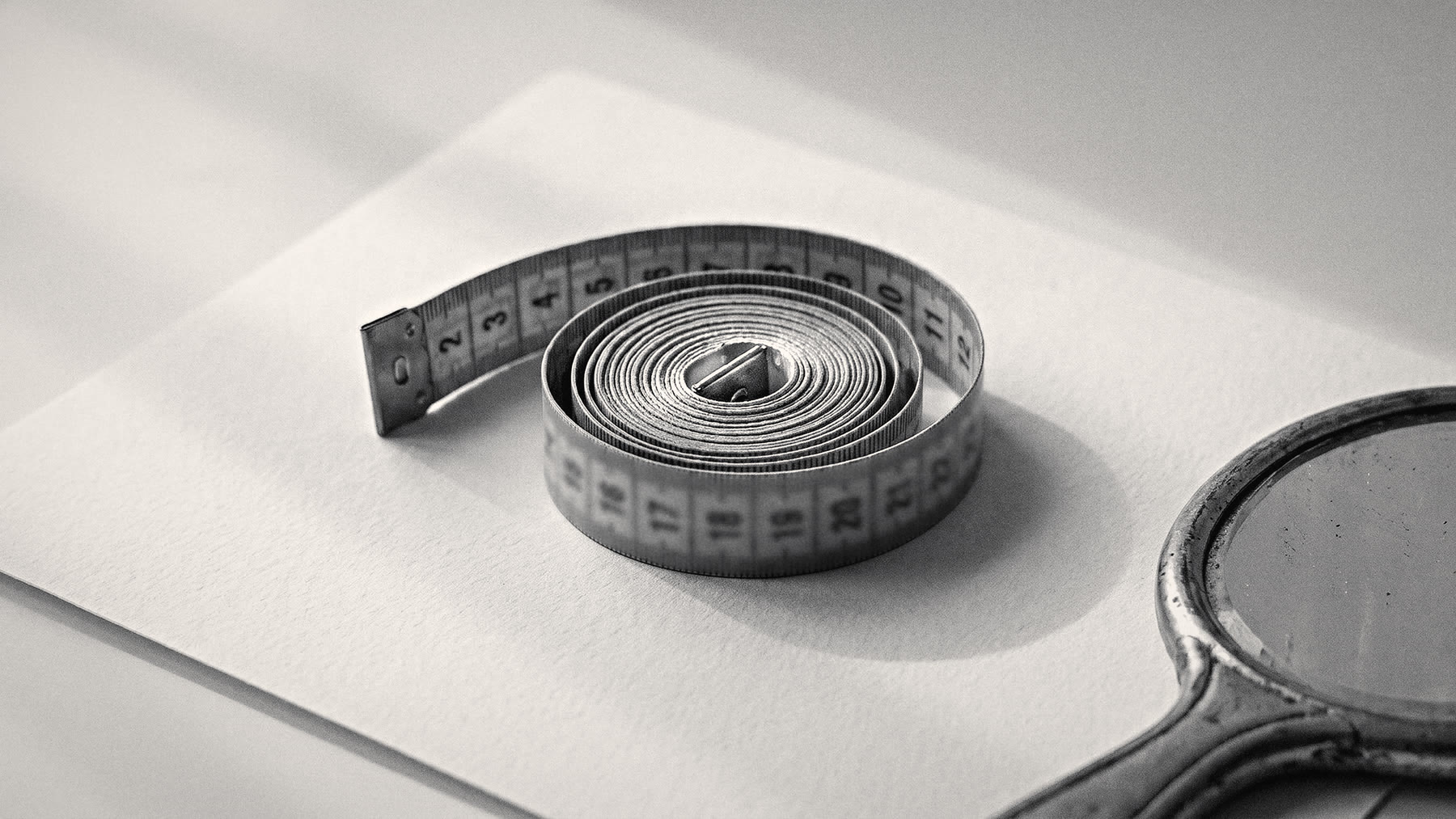
You need a cloth tape and a mirror, and about two minutes. Stand straight, bare or in a thin unpadded bra. Pass the tape around the ribcage directly under the bust and pull it snug, the way a band would sit, keeping it level all the way round. The mirror is for your back, where a tape likes to ride up unnoticed.
Then measure again across the fullest part of the bust, this time holding the tape loosely enough that it rests on the skin without pressing in. The first number gives the band. The second, minus the first, gives the cup: on continental charts each step of about two centimetres is one letter, and on British charts each inch is.
Write both numbers down in centimetres. They are more use than any size they translate into, because every maker translates them a little differently.
One body, three labels
The same ribcage is a 75 in Germany, a 34 in the United Kingdom and a 90 in France. Nothing about the garment has changed between those three numbers. The German system counts the underbust in centimetres, the British system counts in inches by an older convention, and the French number sits fifteen above the German one. The size guide on this site lists the common conversions.
Cup letters drift too. Past a D, British makers double their letters (DD, then E, F, FF) while most continental makers run straight through the alphabet, so an F on one label is not an F on another. When a shop sells both kinds of house, check which system the listing is written in before you compare.
The sizes on either side
Because the cup is relative to the band, the same cup volume appears under different names. A 75C, a 70D and an 80B are cut to hold roughly the same amount; what changes is the length of the band they hang from. Fitters call these sister sizes.
They are useful in one specific situation. If the cups of a bra fit you and the band does not, the answer is rarely the next letter. Go down a band and up a cup if the band is loose, or up a band and down a cup if it is tight, and the cups will stay as they were.
What a good fit looks like
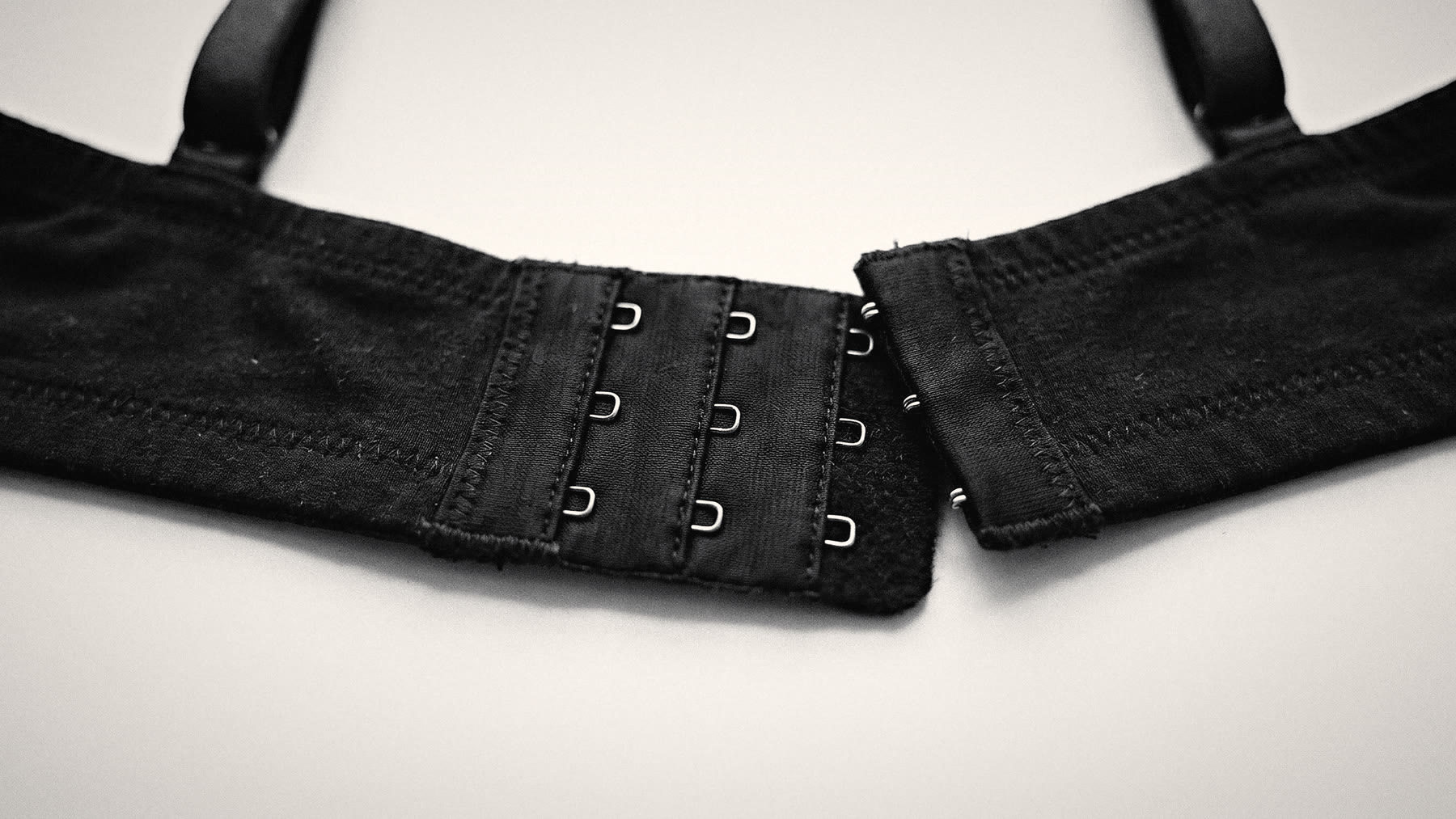
The band does most of the work, which surprises people who have spent years tightening their straps. It should sit level around the body, front to back, and feel firm on the loosest row of hooks when the bra is new. The other rows are there for later, when the elastic has relaxed with wear.
The piece of fabric between the cups should lie flat against the breastbone. If it stands away, the cups are usually too small. Straps that dig in usually point to a band that is too loose and has handed its job to the shoulders. A cup that gapes at the top may be too large, or simply the wrong shape for you, which no change of size will mend.
Give a bra a minute before you judge it. Lean forward, settle into the cups, stand up and look at the band in the mirror again.
Before you order
Makers publish their own charts, and they do not all agree. Treat your two numbers as a starting point and read the chart of the house you are buying from, since that chart describes the garment that will arrive.
Then read the shop’s returns terms, particularly if you mean to order two sizes and send one back. Some shops take bras back unworn with their labels attached. Some do not take certain underwear back at all, and it is better to learn which kind of shop you are dealing with before you pay.
In the shops
Bras in the shops
- 17 percent off

Micro Essentials Soft bra remov. pads | sangria 081474-08S913
36/C-D 38/C-D 42/A-B 44/C-D
Was $53$44 , €39.99 at the shop, was €47.99 - 10 percent off

Triangle Bra & Thong Set
XS S M L XL XXL 3XL
Was $96$86 - 30 percent off

Wonderfulace Padded triangle bra | rose dust 081161-08S567
70A 70B 70C 75A 75B 75C 80A 80B
Was $44$31 , €27.99 at the shop, was €39.99 
Reggiseno senza ferretto Maison
$385 , €350 at the shop

Reggiseno push-up Maison
$496 , €450 at the shop

Brassière col V - Bande à Part
$76 , €69 at the shop

Coordinato push up e brasiliana con pizzo a contrasto serie Passione
$25 , €22.90 at the shop

Reggiseno scollato Garden Tattoo
$385 , €350 at the shop